

Your identity is one of your most valuable digital assets. In an era where life happens online — banking, shopping, work, social media — protecting who you are is essential.
Identity theft occurs when someone steals your personal information and uses it without permission to commit fraud, access accounts, or cause financial loss.
This guide explains:
- What identity theft is
- Real-world examples
- Common ways thieves steal your data
- Clear prevention strategies
- How to respond if your identity is stolen
Let’s begin. 👇
What Is Identity Theft?
Identity theft happens when a criminal uses someone else’s personal details — like name, date of birth, phone number, government IDs, or passwords — to:
- Open bank accounts
- Access your financial accounts
- Take loans or credit cards in your name
- Make unauthorized transactions
- Create fake IDs
In simple words:
If someone pretends to be you online or offline to benefit themselves, that’s identity theft.
Types of Identity Theft (2026 Trends)
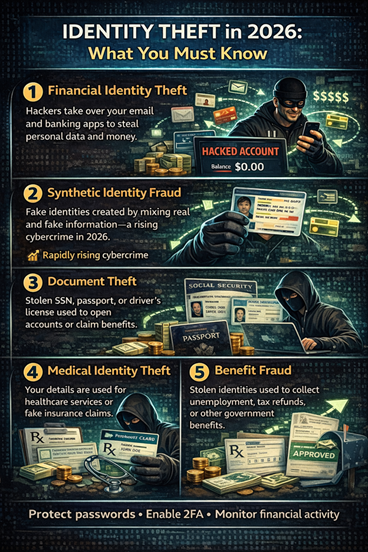
Fraud tactics evolve every year. In 2026, these types are most common:
Financial Identity Theft
Thieves access your bank accounts, credit cards, or loans to steal money.
Account Takeover
Hackers take control of your email, social media, or banking app.
Synthetic Identity Theft
Criminals create a fake identity by mixing real and fake information (rising in 2026).
Government ID Misuse
Stealing SSN, passport, driver’s license to open accounts or claim benefits.
Medical Identity Theft
Using your details to get healthcare services or file insurance claims.
How Identity Theft Happens (7 Major Ways)
Understanding how it happens helps you prevent it.
1. Data Breaches
Large data leaks expose millions of personal records.
2. Phishing Scams
Fake emails and messages trick you into revealing passwords.
3. Public Wi-Fi Vulnerabilities
Unsecured Wi-Fi lets hackers capture your data.
4. Malware and Keyloggers
Malicious software records your typing and login info.
5. Social Engineering
Criminals manipulate you into giving details.
6. Shoulder Surfing
Someone watches you enter passwords in public.
7. Physical Theft
Losing your ID, phone, or documents opens risk.
Early Warning Signs of Identity Theft
Detecting theft early saves money and stress.
Watch for:
- Unauthorized transactions
- New accounts you didn’t open
- Bank login denied
- Unfamiliar charges
- Alerts from credit monitoring
- Unexpected password resets
If you see these — act fast.
Identity Theft in India — Context & Trends 2026
Identity theft cases in India are increasing due to:
- Rapid digital adoption
- Online banking growth
- Aadhaar misuse concerns
- Rising cyberattacks and SIM swaps
The government and banks now use multi-factor authentication and real-time fraud monitoring to reduce risks.
How to Protect Your Identity (Step-by-Step Strategies)
Here’s your real-world prevention plan:
1. Strong Passwords & Passphrases
Use long, random passwords and a password manager.
2. Two-Factor Authentication (2FA)
Always enable 2FA on email, banking, and social accounts.
3. Secure Email Account
Your email is the gateway — protect it first.
4. Monitor Financial Activity
Check bank and card statements weekly.
5. Check Your Digital Footprint
Search your name on Google regularly.
You can also read:
How to Remove Personal Information From Google Search →
https://krishnasphere.com/remove-personal-information-from-google-search
6. Be Careful With Public Wi-Fi
Avoid banking or shopping on public Wi-Fi.
7. Shred Personal Documents
Physical security matters too.
8. Use Trusted Security Tools
Install reputable antivirus and anti-phishing tools.
9. Freeze Credit (Where Possible)
In some countries, freezing credit stops new account fraud.
10. Educate Family Members
Teach elderly and kids about scams.
What to Do If Your Identity Is Stolen (Recovery Plan)
If you suspect theft:
Step 1 — Freeze Accounts
Lock bank and credit accounts immediately.
Step 2 — Change Passwords
Start with email and banking accounts.
Step 3 — Report to Authorities
File a police report and contact bank fraud team.
Step 4 — Request Credit Report Check
Get an official credit report and alert fraud.
Step 5 — Educate Your Contacts
Scammers may misuse your identity to target others.
Common Identity Theft Myths (and Truths)
Myth: “Only wealthy people are targeted.”
✔️ Truth: Anyone with an online presence can be targeted.
Myth: “I’ll be notified immediately.”
✔️ Truth: Some thefts go undetected for months.
Myth: “Antivirus is enough.”
✔️ Truth: Antivirus helps, but identity theft prevention is broader.
Best Tools for Identity Protection (2026 List)
| Category | Recommended Tools |
|---|---|
| Password Manager | Bitwarden, 1Password |
| Antivirus | Norton, ESET |
| Credit Monitoring | Experian, CIBIL (India) |
| VPN for Secure Wi-Fi | NordVPN, ProtonVPN |
Frequently Asked Questions (AEO Optimized)
Is identity theft the same as data breach?
No. A data breach exposes data; identity theft is misuse of that data.
Can identity theft happen offline?
Yes — stolen wallets or physical documents can lead to fraud.
Does identity theft affect your credit score?
Often, yes. Unauthorized accounts and debts can lower scores.
Can identity theft be prevented 100%?
No tool is perfect, but strong security reduces risk dramatically.
Should I report to the police?
Yes — especially if financial loss is involved.
Final Thoughts
Identity theft is a serious threat in 2026 as digital life expands. But understanding how it happens and using smart protection tools can make you much safer online and offline.
Stay vigilant, keep your data secure, and always double-check suspicious activity.
For more digital safety and privacy guides, visit KrishnaSphere.com.
Internal Links from This Article
-
How to Remove Personal Information From Google Search
https://krishnasphere.com/remove-personal-information-from-google-search -
Best Cybersecurity Tips for Beginners in India
https://krishnasphere.com/best-cybersecurity-tips-for-beginners-in-india
Leave a Reply